Critical Policy Collective

University of Southern California

Critical Policy Collective


Bridging academic scholarship and real-world policy impact by centering student leadership in policy engagement — rooted in community relevance and justice-driven inquiry across the P–20 landscape.

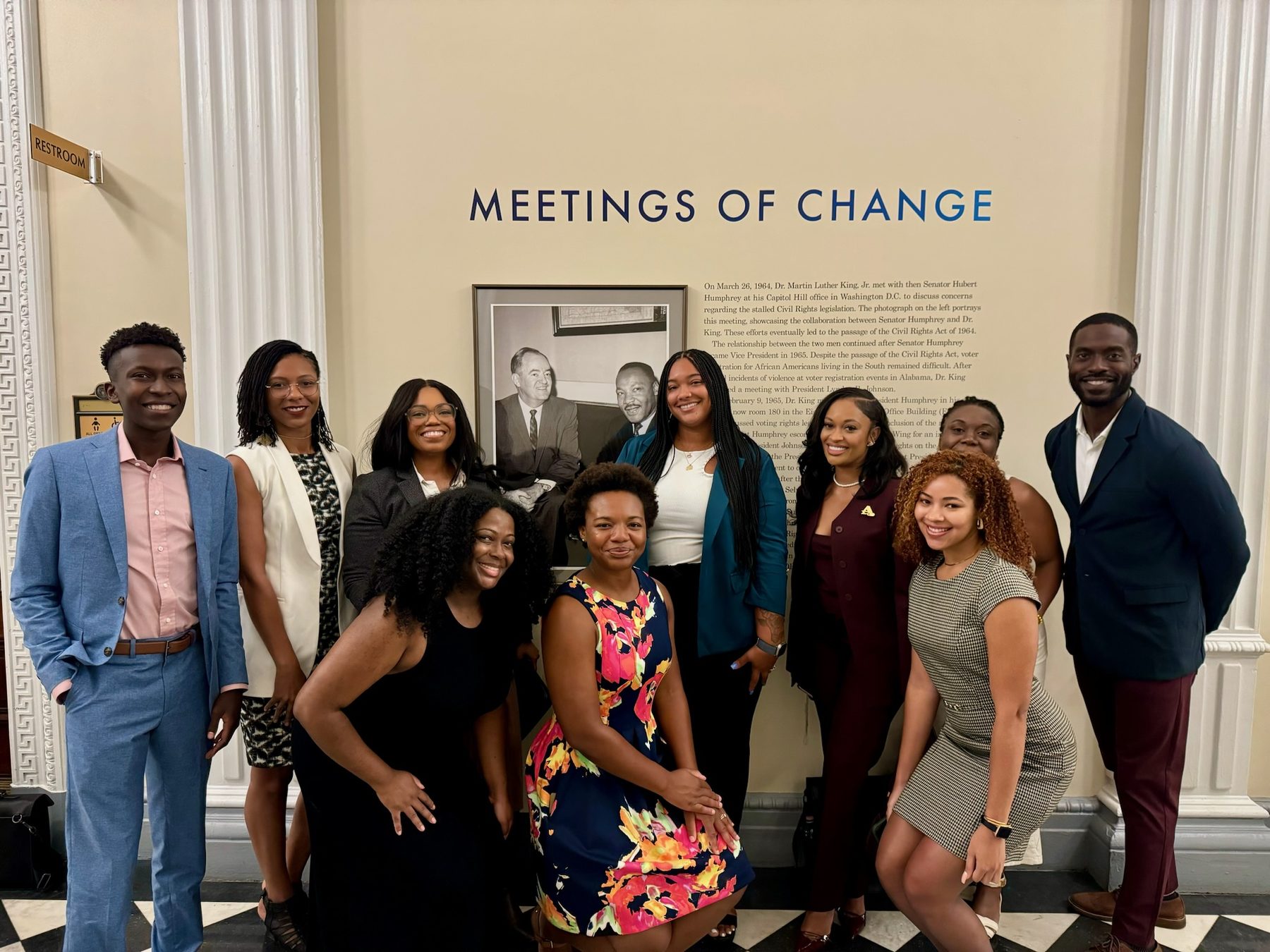
Members of the Critical Policy Collective at the U.S. Capitol, standing before the Meetings of Change display commemorating Dr. Martin Luther King Jr.'s 1964 meeting with Senator Hubert Humphrey.
The collective in Washington, D.C., fall 2024, at the Capitol's "Meetings of Change" display. (Photo/USC CPC)
About the collective

Bridging scholarship and real-world impact

The Critical Policy Collective is a student-led, faculty-supported research and training initiative at USC, spanning the Rossier School of Education and the Dornsife College of Letters, Arts and Sciences. It centers student leadership in policy engagement through a collaborative model rooted in community relevance and justice-driven inquiry.

CPC equips members to interrogate whom education systems serve, whom they exclude, and why — and to translate that inquiry into public-facing work intended to inform and shape policy outcomes across the P–20 landscape.

The collective grew out of the Critical Policy Institute, the inaugural Washington, D.C. policy immersion co-constructed with the Rossier Black Student Collective in fall 2024. CPC is the standing organization that carries that work forward.

Focus areas

Where the work is concentrated

Education systems are defined not only by their resources, but by the policies determining who benefits, how, and under what conditions.

  • K–12 funding equity

    How money moves through school systems, and which students that movement reaches.

  • Chronic absenteeism

    Why students miss school, and the conditions that bring them back.

  • Impacts of anti-DEI legislation

    How legislative activity is reshaping institutions and the students within them.

  • Higher education affordability

    Cost, access, and the borrowing conditions that determine who can enroll and finish.

  • Workforce development

    The pathways connecting education systems to sustainable employment.

Policy reports · 2025

The anchor portfolio

Three interconnected reports written to be accessible to policymakers and to close with applicable recommendations. All edited by Kendrick B. Davis.

K–12 funding

The Cost of Equity

Exploring Recent K–12 Federal and State Funding Shifts and Their Impact on Black Students

Finds that attendance-based funding formulas — including California's Local Control Funding Formula — exacerbate disparities for Black students and under-resourced districts, and proposes equity-focused alternatives.

Read the report
Attendance

Combating Chronic Absenteeism

Examining California's Strategies for Addressing a Longstanding National Crisis

Documents how attendance-based funding penalizes schools serving high-poverty communities, and makes the case for enrollment-based funding and wraparound supports as prevention-centered strategies.

Read the report
Higher education

DEI Under Fire

Policy, Politics, and the Future of Campus Diversity

Analyzes the legislative wave dismantling DEI offices and banning race-conscious hiring — led by six states — and identifies strategies for legal navigation and institutional response.

Read the report

Public scholarship

Federal regulatory engagement

Public comment on Reimagining and Improving Student Education

Docket ID ED-2025-OPE-0944 · RIN 1840-AD98 · 34 C.F.R. Parts 674, 682, 685

CPC submitted this comment on the Department of Education's proposed rule implementing Title IV changes under Public Law 119-21, which eliminates Graduate PLUS loans and imposes new borrowing caps on graduate and professional students. The comment argues that constraining student-side financing without corresponding attention to institutional pricing may increase unmet need, push borrowers toward higher-risk financing, and raise non-completion — which federal longitudinal data tie directly to higher default rates.

  • Clarify how the statutory definition of "professional degree" applies across similarly situated licensure-based professions.
  • Provide transition protections so enrolled borrowers don't lose eligibility through definitional reinterpretation.
  • Conduct and publish distributional analyses of effects on access, persistence and repayment.
  • Commit to ongoing public reporting of net price, borrowing composition, completion and delinquency trends.
  • Use existing Title IV oversight tools to promote cost transparency and institutional alignment.

In progress

  • Regional policy research Southern California education priorities
Policy immersion · Washington, D.C. · Fall 2024

Federal Policy Immersion Experience

The Critical Policy Institute convened during the Congressional Black Caucus Foundation's Annual Legislative Conference. Over one week the collective met across the federal policy ecosystem — the meetings below shaped every line of research that followed.

  • National Space Council

    Dr. Quincy Brown, Director of Space STEM and Workforce Policy · Dr. Amber McIntyre
    On how scientific data informs response to phenomena that disproportionately affect vulnerable communities.

  • American Educational Research Association

    Dr. Felice Levine · Dr. Lori Hill · Dr. George Wimberly
    On federal advocacy, and entry points into policy work for graduate students.

  • Progressive Policy Institute

    Curtis Valentine, Co-Director, Reinventing America's Schools Project
    On funding competition, accountability and selective enrollment.

  • The Education Trust

    Dr. Jinaan Bitar, Director of Higher Education Research
    On the role of research organizations in shaping federal education policy.

  • DC Public Schools

    Glenn Starnes, Senior Deputy Chief, Social Emotional & Academic Development
    On challenges shared by urban districts including DCPS and LAUSD.

  • U.S. House of Representatives

    Staff of Rep. Mark DeSaulnier (D-CA)
    On student debt, Public Service Loan Forgiveness and higher education affordability.

  • Thurgood Marshall College Fund

    Sean Burns, Esq. · Victor Santos
    On scholarships, capacity building and advocacy for HBCU students.

  • D.C. College Access Program

    Eric Waldo
    On the federal role in access, affordability and financing across K–12 and higher education.

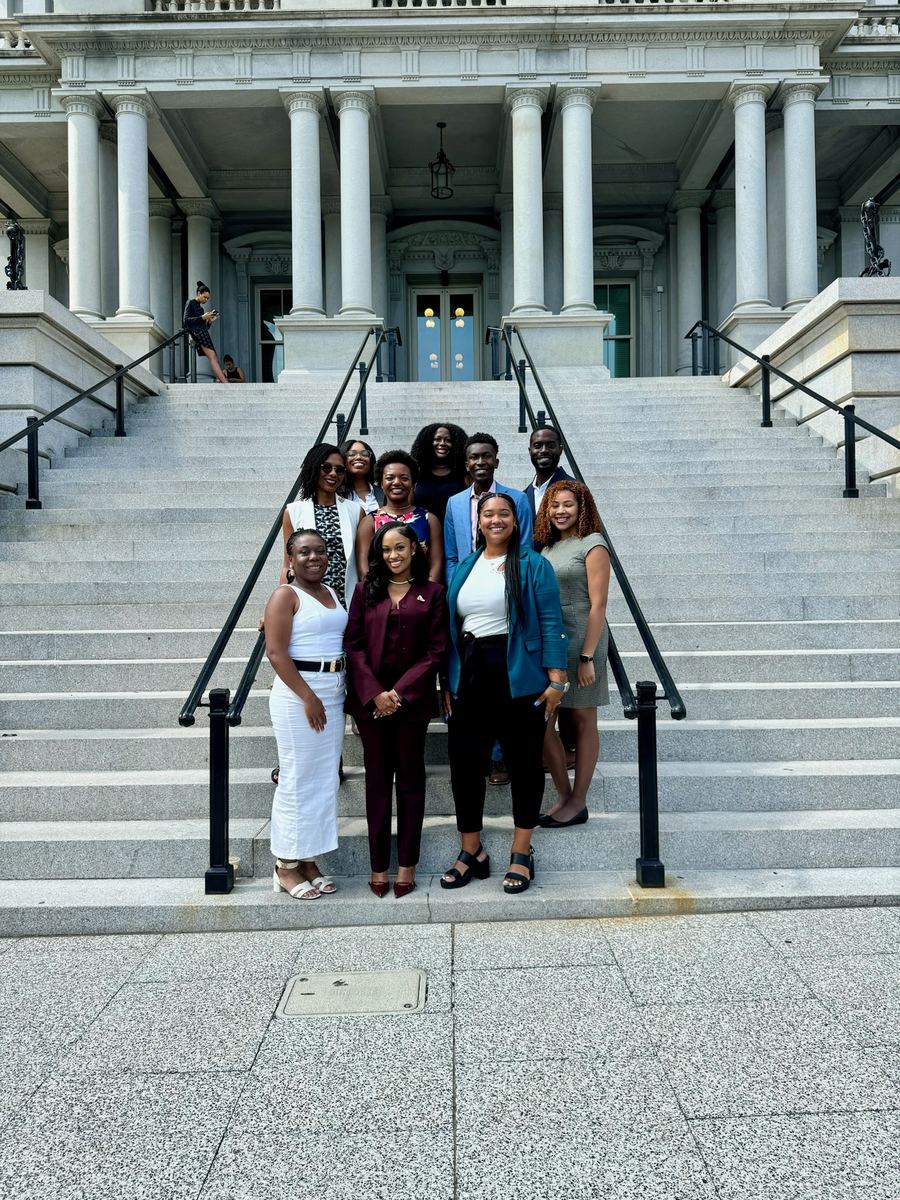
Collective members gathered on the navy steps of the Eisenhower Executive Office Building.
The Eisenhower Executive Office Building. (Photo/USC CPC)
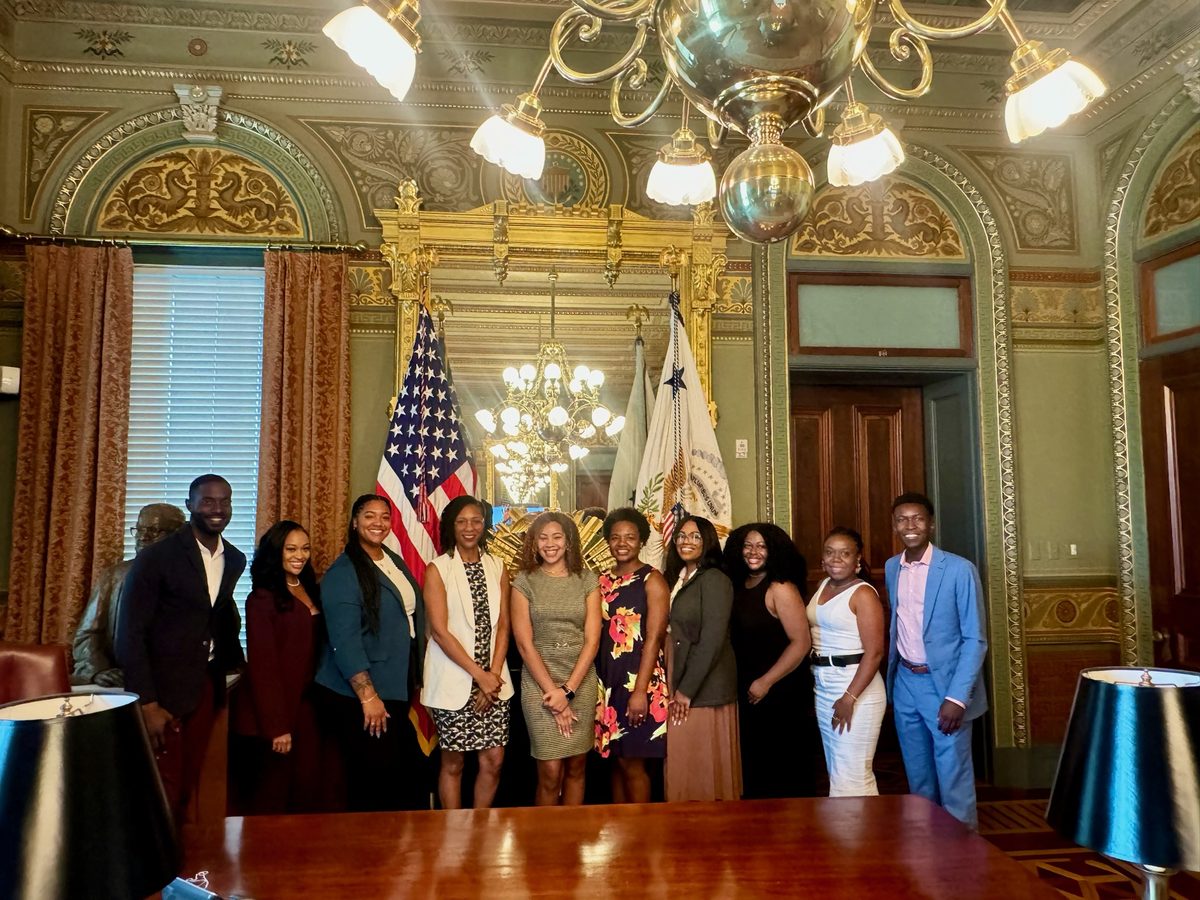
Collective members standing with National Space Council staff beneath the chandeliers of the Vice President's Ceremonial Office.
With the National Space Council in the Vice President's Ceremonial Office. (Photo/USC CPC)
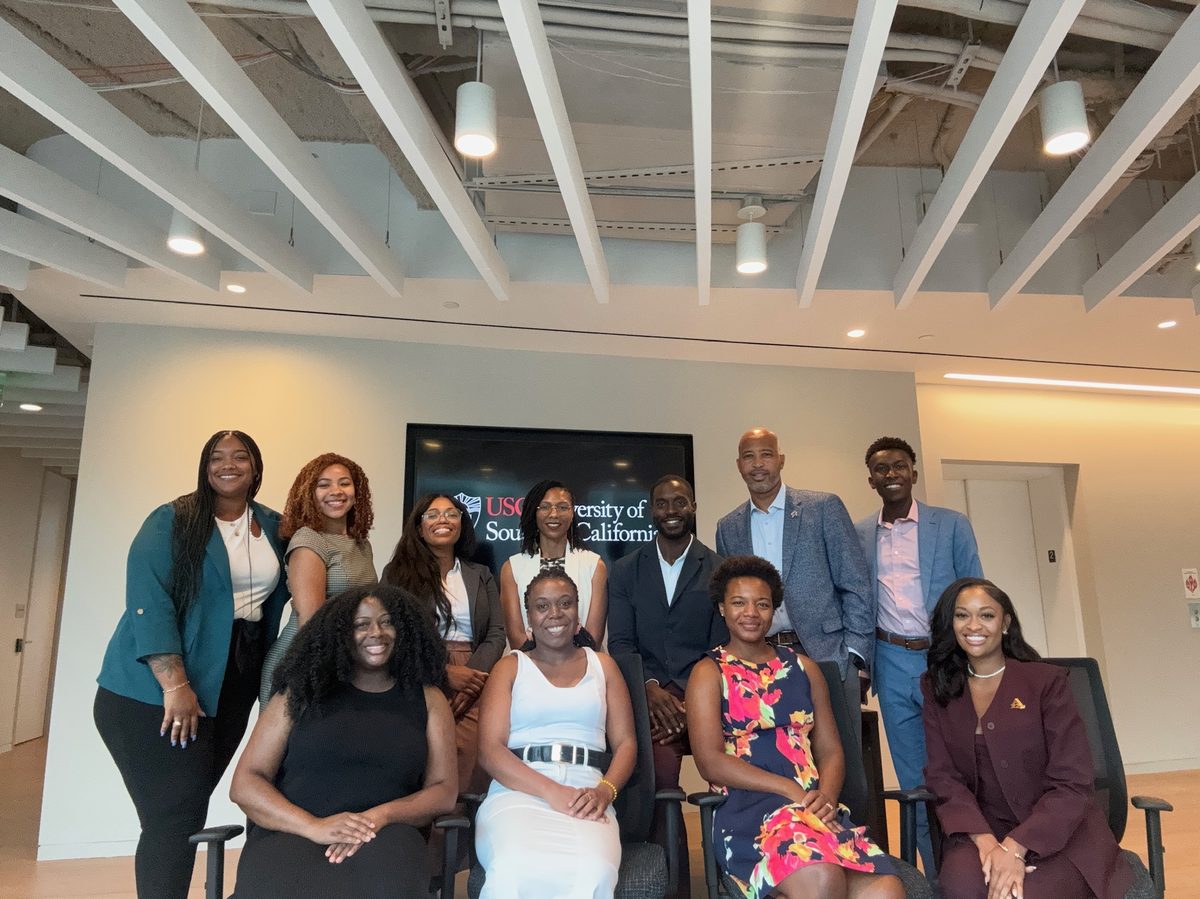
Collective members with Curtis Valentine at the USC Capital Campus.
With Curtis Valentine, Progressive Policy Institute, at the USC Capital Campus. (Photo/USC CPC)
People

The collective

CPC is led by its student researchers, with faculty support. The research agenda belongs to its members. Members are listed alphabetically.

Faculty

Kendrick B. Davis Faculty advisor

Professor of Research and Co-Director of the USC STEM Center, USC Rossier. Previously worked on K–12 policy in the U.S. Senate.

Editor of the report portfolio; co-author on the federal rulemaking comment and both ERI essays.

Members

Kirsten Elliott, PhD NetApp

Enterprise Client Executive. A USC Rossier doctoral candidate in Educational Psychology and research assistant at CELDTech during the collective's founding. Her work examines race, education technology and participatory design-based research, with a focus on how Culturally Sustaining Pedagogy can inform more equitable learning environments.

Co-author, The Cost of Equity and the ERI attendance essay.

ORCiD 0009-0009-7092-8326
Mya Haynes USC Rossier

PhD candidate and USC Provost's Fellow in Higher Education, and research assistant at the USC Race and Equity Center and the Pullias Center for Higher Education. Her qualitative and mixed-methods research examines how race, racism and racial disparities shape access and success for marginalized students, faculty and staff, including student–faculty interaction.

Lead author, DEI Under Fire; co-author on the ERI anti-DEI essay and the federal comment.

ORCiD 0009-0004-3081-1629
Keena Jones USC Rossier

PhD student in Urban Education Policy and research assistant at the Center for Empowered Learning and Development with Technology. Her research centers on culturally relevant curriculum implementation in school districts, specifically policies aimed at serving Black students, with the goal of creating more equitable classrooms in predominantly Black communities.

Co-author on both K–12 reports and the ERI attendance essay.

ORCiD 0000-0003-3011-9734
Alvin Makori USC Rossier

PhD candidate in Urban Education Policy and research assistant at the USC EdPolicy Hub. His work investigates how historically marginalized K–12 students and families navigate major learning disruptions, notably neighborhood change.

Lead author, Combating Chronic Absenteeism; co-author on The Cost of Equity, the ERI attendance essay and the federal comment.

ORCiD 0000-0002-6384-3860
Taylor McGee, PhD Christopher Newport University

Assistant Professor. A USC postdoctoral researcher at CELDTech during the collective's founding. Her research uses critical and strengths-based theory to understand the impact of racial microaggressions on Black students' academic outcomes, the racial landscape of formal online learning, and the strengths and coping mechanisms Black students develop through cultural practices.

Co-author on both K–12 reports and the ERI attendance essay.

ORCiD 0000-0001-8766-8481
Shawntae Mitchum, PhD USC Dornsife

Earned her PhD in Sociology at USC. Her research is grounded in Black sociological traditions and explores the intersections of race, gender and institutional equity in higher education — using qualitative and historical methods to examine the lived experiences of Black faculty, staff and students, with particular attention to how anti-Black racism shapes DEI efforts on college campuses.

Co-author, DEI Under Fire and the ERI anti-DEI essay.

ORCiD 0009-0006-0814-8351
Alexia Oduro USC Rossier

PhD student and Provost Fellow in Higher Education. Her research examines how higher education institutions respond to anti-Black racism and how those responses shape students' understandings of race, racism and institutional responsibility — treating anti-Blackness as a structural condition of educational institutions rather than an episodic one.

Co-author, DEI Under Fire, the ERI anti-DEI essay and the federal rulemaking comment.

ORCiD 0009-0007-4665-3719
Desiree O'Neal USC Rossier

PhD candidate in Urban Education Policy and research assistant at the National Center for Research on Education Access and Choice and the USC Rossier Center on Education Policy, Equity, and Governance. Her research critically examines how race, antiblackness and broader sociopolitical contexts influence K–12 education policy and decision-making at the local, state and federal levels.

Lead author, The Cost of Equity; co-author on Combating Chronic Absenteeism and the ERI attendance essay.

ORCiD 0000-0002-9851-9905
Glenda Palacios Quejada, PhD USC Rossier

Earned her PhD in Urban Education Policy at USC, where she was a research assistant at the Pullias Center for Higher Education. Her research uses quantitative critical methods to explore how Ethnic Studies courses affect academic performance, labor-market outcomes and local communities when implemented in higher education.

Co-author, DEI Under Fire and the ERI anti-DEI essay.

ORCiD 0000-0001-5076-7419
Akunna Uka USC Rossier

PhD student in Urban Education Policy focusing on K–12 policy, and research assistant at the Rossier Center on Education Policy, Equity, and Governance. Her research examines education policies aimed at improving the academic success and well-being of Black students.

Co-author on both K–12 reports and the ERI attendance essay.

ORCiD 0009-0005-3048-3941
Get involved

Join the collective

CPC is open to USC students and faculty interested in justice-oriented policy research and direct policy engagement. Reach out to learn about upcoming sessions.